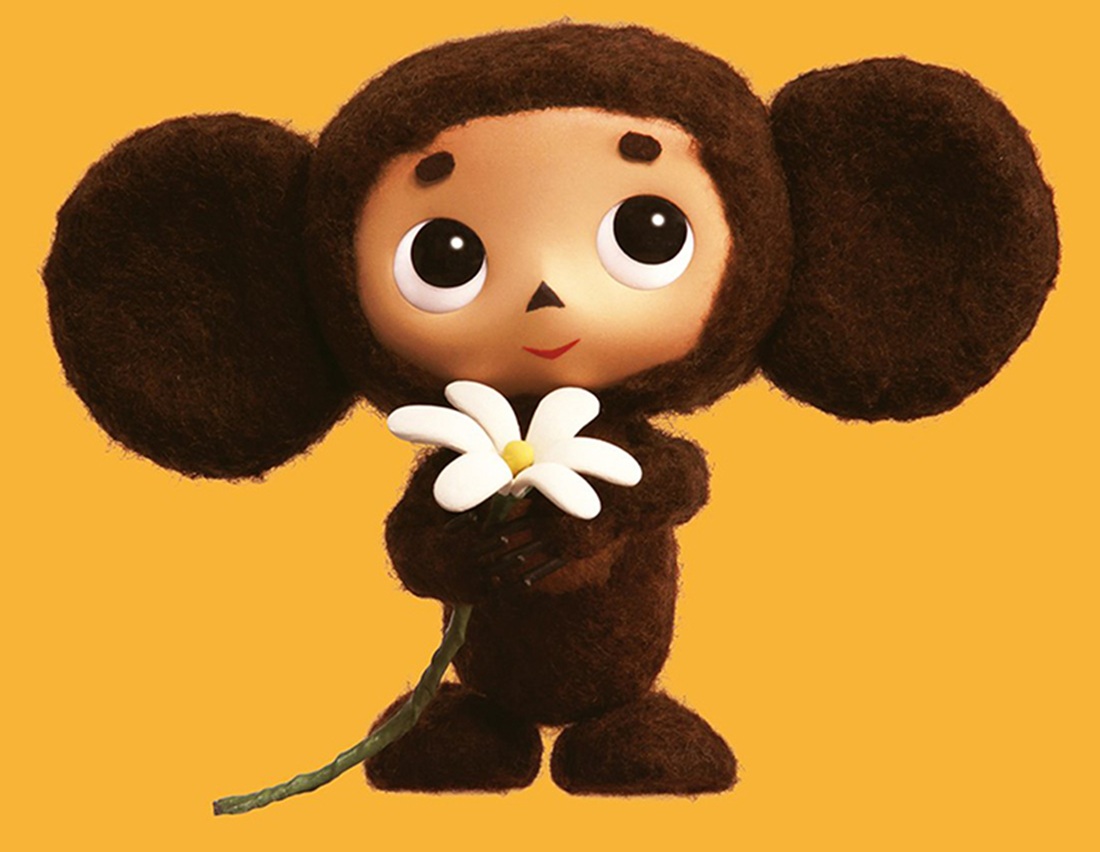
Cheburashka, a non-political cartoon character born in the last century—after all, my Soviet childhood—has gotten lost somewhere in the subconscious, probably not only of mine but of millions of others. The sympathy he evokes among modern children, living in a completely different, digital, commercialized, and overly informational world, gives hope that simple and understandable symbols of kindness (and Cheburashka is certainly one of them), despite history’s unexpected twists, persistently and apolitically pave their way into the future, warming it slightly. Albeit imaginary, it is still warm.
One way or another, during a math lesson I taught in seventh grade, Cheburashka almost materialized, as if emerging from the very depths of the subconscious. True, it cost my colleague, the physics teacher, and me a few unpleasant moments. But first things first.
I taught that lesson in a multimedia lab equipped with the latest technological advances. It had modern computers, a multimedia projector, and a screen. Some teachers did use this classroom when they brought their pupils to the multimedia lab to watch educational films. Next to the screen were doors. No, not to a magical room, but to an ordinary, small but cozy utility room. It contained old visual aids, tables, and equipment that, despite their considerable age, continued to provide tangible benefits in teaching the exact sciences. There, Ivan Sergeyevich, the physicist, and I often sampled the aromatic coffee he’d brewed himself.
I took the key to the classroom from the cleaning lady on duty during recess, unlocked the doors just before class, and let in the noisy students, who had quieted somewhat in the computer environment. I was sure the supply room was empty.
But I was wrong, as it turned out later. Ivan Sergeyevich was there, checking children’s notebooks for lab work. The cleaning lady, having mopped the floor of the classroom during the break, didn’t notice the teacher in the supply room and locked the multimedia lab with a lock that, incidentally, couldn’t be opened from the inside. However, the physics teacher himself didn’t know this, and I certainly didn’t. So, I switched the projector, trying to sharpen the image on the whiteboard. I had the idea of quieting the idle seventh-graders, who were becoming increasingly noisy by the minute. I could calm them down by joking with them. Tearing myself away from the projector, I looked carefully at the class and placed the index finger of my right hand to my lips, pointing with my left to the closed utility room. I said quietly and meaningfully, “Shh… Otherwise, you’ll wake him up, and he’ll come out here right now! And who knows what kind of mood he’s in this morning.”
“Who?” “Who?” the teenagers began to ask, cautiously but incredulously.
“Cheburashka, of course!”
“Cheburashka?” came the sarcastic question.
“Well, yes,” I stated confidently, without a hint of a smile on my face.
And who could have known that at that very moment the door I was pointing to would suddenly open? It was unclear for whom it would be more unexpected—me or the puzzled pupils.
To the utterly surprised gazes, Ivan Sergeyevich emerged from the utility room. His ears weren’t too large—well, maybe just a little—but when the students saw the teacher’s shadow on the screen, enlarged and slightly altered, it couldn’t help but evoke associations with a cartoon character, especially after my words about Cheburashka.
My confusion dampened the natural impulse to suppress the incredibly loud laughter of the seventh-graders that erupted in the classroom. One can only imagine the state of Ivan Sergeyevich, who heard the children shouting “Cheburashka!” while pointing at him and couldn’t understand why his appearance in the classroom had provoked such a violent reaction. Unsure whether to feel insulted or not, Ivan Sergeyevich resolutely left the classroom and strode down the empty school hallway. Catching up with him a few seconds later, I awkwardly tried to explain my unfortunate joke to my colleague. Fortunately, the physics teacher was a connoisseur of humor and, understanding from my words what had actually happened, burst out laughing heartily.
Ukraine, 2025
About the Author
Yurii Tokar was born in 1967 in the USSR. In 1988, he began teaching mathematics in the region affected by the Chernobyl disaster. His stories, essays, and poems have been published in Ukraine, Germany, the USA, and elsewhere. His work has appeared in the Russian-language magazine “Чайка” (Washington), Litbreak magazine (USA), and StylusLit journal (Australia), among others.