
Book Review by Pradipta Mukherjee
Suresh Lal’s book “The Water: Spiritual Gender and Environmental Perspectives” explores the multifaceted significance, the sociological, cultural and religious metaphors associated with “water.” The Foreword, written by Rajendra Singh, brilliantly encapsulates the very essence of B. Suresh Lal’s book. Water, Suresh Lal states, is an invaluable resource that has shaped civilisations, cultural practices, human development and ecosystems throughout history. As his book goes deeper to explore water’s role throughout history, he reveals its profound impact on shaping human civilisation. Lal’s socio-culturally rich text goes on to explore how water reminds us of the mythological rivers and how rivers occupy a central place in the cultural, religious, and ecological imagination of India.
Part I of his book explores the fundamental significance of water. It interestingly looks at the chemistry and physics of water. Part II discusses the essence of water, traces the history of water and its role through time. Lal’s book in Part III goes on to visit rivers and he asserts that rivers are not merely natural water bodies but living presences woven into daily life, mythology, ritual, and collective memory. Since ancient times, Indian civilisation has flourished along its rivers — from the Indus and Saraswati in antiquity to the Ganga, Yamuna, Saraswati, Narmada, Godavari, and Kaveri in the present day. Each river is revered as a life-giver, purifier, and sustainer of communities, symbolising fertility, continuity, and the cyclical rhythms of nature.
Rivers are mothers, muses and silent witnesses to the rise and fall of civilisations. Lal revisits the Ganga, particularly “Ganga Maa” as a divine and cultural entity. He recounts that in her flowing rhythms, Indians have long heard the pulse of purity, renewal and the promise of return. Ganga is imagined not as a river alone, but as a celestial being descending from the heavens, tamed only by the locks of Shiva, yet free enough to wash the sins of humankind.
Lal, therefore, poetically observes how rivers in Indian culture and civilisation have a deeper significance. Part III, “Cultural and Spiritual Perspectives”, revisits “Water in Religion: Sacred Symbolism and Rituals.” In the cultural landscape of India, rivers have traditionally been seen as maternal forces — nourishing the land, enabling agriculture, and shaping settlement patterns. Many of India’s sacred cities, including Varanasi, Haridwar, Prayagraj, and Rameswaram, are located along riverbanks, reflecting an ancient understanding that the presence of flowing water sanctifies the environment. Lal keenly observes in “Ceremonial Practices and Celebrating Water Vitality” how rituals such as bathing, offering prayers, Shivaratri rituals, performing ancestral rites (śrāddha), and immersing idols during festivals are deeply tied to riverfront spaces.
The rivers of India, and the Ganga in particular, as Lal observes, are more than physical waterways. They are cultural memory, spiritual pathways, and symbols of life itself. Through myths, rituals, festivals, and daily practices, they structure the sacred geographical spaces of the subcontinent, shaping identities and values across generations. The Ganga thus stands as a powerful reminder of India’s enduring relationship with nature — one that blends reverence, dependence, and livelihood.
The Ganga is believed to possess inherent purificatory power. A dip in her waters is thought to cleanse accumulated sins, while the act of immersing the ashes of the dead is meant to ensure liberation (moksha). This belief has shaped centuries of pilgrimage: from Gangotri in the Himalayas to the ghats of Varanasi, millions travel to offer prayers, perform rites, and seek spiritual renewal.
Lal often describes water, especially the Ganga, through maternal and feminine imagery—life-giving, nurturing, yet vulnerable. In the Hindi film, directed by Raj Kapoor, Ram Teri Ganga Maili (1985), the character Ganga herself becomes the symbolic embodiment of the river: pure at origin, exploited by society, yet spiritually resilient. The dual metaphor—woman as river, river as woman—echoes the gendered, cultural symbolism that Lal interprets in his book. It also justifies the subtitle of his book, “Spiritual Gender and Environmental Perspectives”.
Interestingly, Lal’s book and Raj Kapoor’s film treat the river’s journey as a narrative of moral and environmental decline. As the Ganga travels, corruption, industrial waste, and social hypocrisy accumulate around her. This trajectory parallels Lal’s argument that rivers map the ethical health of a civilisation: the state of water mirrors the state of society.
Lal’s book leaves a strong ecological message within cultural frames. His work situates water within spiritual and cultural traditions to argue for ecological responsibility. Lal’s book then goes on to highlight the cultural practices associated with mythical rivers. Along the Ganga’s course, numerous festivals and rituals reaffirm her cultural significance. Ganga Dussehra, Makar Sankranti, Chhath Puja, Jal Abhishek, Kumbh Mela and Abhisheka (pouring water over Buddha statues) celebrate the river’s divine presence and cyclical rhythms. He refers to how women in Telangana celebrate the Bathukamma festival to signify the colourful abundance of nature. Varanasi’s evening Ganga Aarti in Dashashwamedh Ghat or Assi Ghat, with its synchronised chants, lamps, and music, transforms the river into a living deity receiving homage from her devotees. The river is also central to life-cycle rituals — birth purification ceremonies, marriage rites like Kanya Daan, and post-death observances frequently involve Ganga jal, and the use of “Jal Pravah” symbolising sanctity and continuity.
Beyond religious devotion, Lal keenly observes how the Ganga represents deeper philosophical ideas in Indian thought. She embodies the flowing nature of dharma, the interconnectedness of human and natural worlds, and the ideal of harmony between life and environment. Historically, the river has sustained vast agricultural systems, trade networks, and cultural exchange across the northern plains. Similar themes resonate in the documentary on the Ganga titled “Ganges” (2007) by the BBC.
Paradoxically, modern pollution and ecological degradation have threatened the very river worshipped for its purity. This contradiction has sparked contemporary movements — from the Ganga Action Plan to grassroots conservation efforts — that seek to restore the river’s health not only as an ecological necessity but also as a moral and cultural responsibility.
In “Artistic Depictions: Cultural Representations of Water”, Lal studies how Literature, paintings, and classical art consistently evoke rivers as metaphors for purity, movement, and the passage of time. He discusses classical art and water as a subject in landscape paintings. He writes on legendary Indian painters like Raja Ravi Varma and Abanindranath Tagore. Bharat Mata, by Tagore, he states, represents our nation’s eternal connection to its rivers and oceans.
Lal evokes the dynamic interaction of light and colour on water and notes how Impressionists and Surrealists push the boundaries of representation in their attempts to capture the fluidity and energy of water. Lal probably had in mind Impressionists like Claude Monet and Paul Cezanne, Surrealists like Salvador Dali in mind. Lal refers to Leonardo da Vinci and other Renaissance painters. He cites the Icelandic-Danish artist Olafur Eliasson whose works make spectators think about the delicate balance of Earth’s water systems.
Part IV is on “Human Rights and Gender Perspectives”. Access to clean and adequate water is not merely a basic human need; it is a deeply gendered issue across much of the world. Lal notes in his book that, in many societies, especially in rural India, women and girls bear the primary responsibility of securing water for domestic use—cooking, cleaning, bathing, caregiving, and maintaining household hygiene. In his sub-sections on “Gender Disparities: Issues facing women” and “Women’s Struggle for Water Access”, he states that this division of labour is shaped by cultural norms, patriarchal expectations, and the undervaluation of women’s time and labour. The result is a profound gender disparity. For millions of women, the search for clean water is a daily struggle woven with physical, emotional, and social burdens. They often walk long distances—sometimes several kilometres—carrying heavy containers through difficult terrain. The struggles women face in securing water reveal the intersection of gender, poverty, and environmental inequality.
This phenomenon shows how water scarcity is not only a resource crisis but also a social justice issue—one that demands gender-sensitive policies, community participation, reliable infrastructure, and the recognition of women as central actors in water management. Empowering women in decision-making processes, improving access to safe water sources, and reducing the time burden of water collection are essential steps toward equitable and sustainable development.
He has written two very significant sub-sections in Part IV on “Dalit Communities: Addressing Water Equity Issues” and “Dalit Communities’ Fight for Water Rights”. He highlights the Dalit Swabhiman Sangharsh, a grassroots Indian movement that promotes Dalit rights and social justice. He states that some Dalit groups in South Asia have turned to court battles to achieve justice and equity in their struggles for water rights. He weaves in new statistics to highlight how transboundary water disputes occur worldwide, affecting many rivers and basins. In this context, he mentions the Indus River Basin, a transboundary water dispute in South Asia. He mentions projects like the South Asian Water Initiative (SAWI) and how such projects encourage regional cooperation and capacity building among South Asian nations to reduce transboundary conflicts.
Part V deals with the healing benefits of water and in this sub-section, he writes about the health benefits of hydrotherapy. He discusses how water therapy can heal musculoskeletal pain or neurological pain involving water-specific exercises. Before he discusses the history of water therapy, he interestingly discusses water for psychiatric rehabilitation, obesity rehabilitation and osteoporosis rehabilitation.
In Part VI and Part VII, Lal states that water security is foundational to sustaining ecosystems, biodiversity, and human development. Healthy ecosystems regulate the hydrological cycle, maintain soil fertility, and support diverse species, yet they are increasingly threatened by pollution, over-extraction, and changing climatic patterns. The resulting loss of biodiversity further destabilises ecological resilience, intensifying the impacts of water scarcity. In this context, rainwater harvesting has re-emerged as a critical strategy, offering decentralised, low-cost means of replenishing groundwater, reducing runoff, and enhancing water availability in both rural and urban regions. Its integration into community infrastructure reflects a broader shift toward sustainable water management, which prioritises conservation, efficient distribution, wastewater recycling, and ecosystem restoration. He brings into perspective how coral reefs significantly contribute to environmental sustainability through multiple functions.
Sustainable practices are central to the vision of smart cities, where digital technologies and eco-sensitive planning converge to optimise water use. Lal asserts that urban design can mitigate stress on natural resources. Nevertheless, growing populations and global warming continue to exacerbate water scarcity, particularly in developing nations. The author states that addressing such a crisis requires interdisciplinary approaches that connect ecological protection, technological innovation, and participatory governance, ensuring that water management remains equitable, resilient, and environmentally sustainable.
In Part VII, he focuses on the “Global Water Crisis” with sub-sections on pollution, contamination and then climate change and its impact on water resources and communities. With great insight, his research highlights desalination technologies and several water treatment methods.
Part IX is on future war for water. He writes that future “water wars” are likely to emerge not solely from military confrontation but from intertwined economic vulnerabilities and environmental stresses. Preventing such conflicts demands integrated water governance, conservation technologies, climate adaptation strategies, and cooperative transboundary management. Agreements on transboundary water management can help prevent conflicts. Equitable distribution and sustainable use of water will be central to securing global stability in the decades ahead.
A well-researched book on the several dimensions of “Water,” readers will find Lal’s book extremely informative, readable and enjoyable. By tracing the spiritual reverence associated with rivers alongside urgent issues of pollution, scarcity and contamination, the book on “The Water” calls for a renewed, collective responsibility toward water governance.
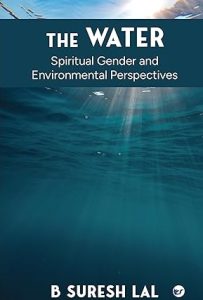
Details of the book: The Water: Spiritual Gender and Environmental Perspectives by B. Suresh Lal, published by Clever Fox Publishing, Chennai, India.
About the Author
B.Suresh Lal is a professor, Head & Chair of the Department of Economics, Kakatiya University, India. He has 24 books to his credit. He has won numerous accolades for his academic research and articles and has visited various countries across the globe on academic assignments.
About the Reviewer
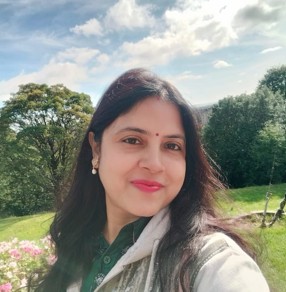
Dr. Pradipta Mukherjee is a film critic and Associate Professor in the Department of English, Vidyasagar College for Women, University of Calcutta. With a dynamic academic and research career that bridges literature and cinema, she has contributed significantly to the study of film theory, adaptation, and cultural representation.
Mukherjee’s authored books include The Fluid Frame in Cinema (Cambridge Scholars Publishing, UK, 2021), Tragic Survivals: From the Hellenic to the Postmodern (2017), Shakespeare on the Celluloid (2014), and Studies in John Fowles’s The French Lieutenant’s Woman (2010), among others. Her research continues to explore the intersections of film, literature, diaspora, and postmodern aesthetics, positioning her as one of the leading voices in contemporary film and literary studies.