Translated from the Arabic by Essam M. Al-Jassim
“Oh, my brother! Where is he? Let me through. Release me!” Sibai twisted his arms in a futile attempt to break free of those who held him back.
His woeful cries tore through his sobs, more cawing crow than words, ragged and gasping.
Hours had passed since the news arrived early that morning, and now the cemetery square had filled with people waiting for the body of Samahi to arrive. The clouds of dust the crowd had kicked up now settled in uneven drifts over sandals and slippers.
Men stood in loose lines around the fresh grave at the cemetery’s edge. Some were scattered on their own; others stretched out on the ground beneath the camphor trees that circled the square like solemn sentinels. A boy wove through the men, offering water in a tin cup. The women clustered along the periphery, claiming the shaded corners of the cemetery, their veiled shapes melting into one long shadow.
Sibai’s wailing deepened, his cries rising from the depths of his soul. “Oh, my brother…” His body gave out. He crumpled to the ground, tumbling through patches of black mud, shallow puddles, and scattered animal waste. He lay there for a moment, then with a loud sob, pulled himself upright and pushed back a lock of his wavy black hair. He paced like a caged bird, good arm flailing, fingers clutching air. As he gasped out broken fragments of his brother’s name—half-sob, half-prayer—his lips trembled. His voice was raw and ragged, his sobs subsiding as exhaustion took hold.
Everyone knew Samahi was Sibai’s whole world, father, mother, provider. He was the only real support Sibai had. After their parents had died, they were left with nothing but a few acres of land and a sun-dried brick house, and Samahi had carried it all. He took on the weight of tending the land, keeping the house from crumbling, and caring for Sibai.
Sibai’s innocence and simplicity had rendered him unaware of life beyond his basic needs. He was born with one arm and one leg bent, forever curled. Raising Sibai came with constant challenges for Samahi—challenges that demanded patience, compassion, and quiet determination. Though Samahi eventually married, his devotion to Sibai never wavered. He cared for him tenderly, shielding him from a world that might never understand his vulnerability. He never forced him into farm work or burdened him with heavy labour. Instead, Samahi shared whatever he had, making sure Sibai always received a fair portion of the meals they prepared on Thursdays, the village market day. On market days Samahi came home with a jute sack or cloth-wrapped tin, the smell pulling Sibai to the door before it opened.
He urged his wife to see that Sibai had his share of fruit, tahini, or halva whenever he brought them home from the city, often feeding Sibai himself. Whenever he had a good harvest, he dressed him in a new jalabiya; a long-sleeved shirt, loose pants, new shoes. During Eids, Sibai beamed with joy at the conventional white turban, sweater, or perhaps a traditional thobe paired with simple flip-flops that he would receive from Samahi. Sibai would walk barefoot across the courtyard to show them off to the neighbours, grinning with pride.
Samahi understood this wasn’t charity; it was Sibai’s rightful share. After all, he had an equal claim to the land left behind by their father—a man deeply devoted to God and respected by the village elders. Everyone believed that God’s blessings flowed to them, in part, because of the way Samahi cared for his disabled brother.
In the village where they lived, Samahi’s influence was so strong that even the elders never dared ridicule or mistreat Sibai. The younger ones wouldn’t even think of saying a word against him. If the children teased or disrespected Sibai, he would be furious. He never hesitated to confront their parents, who in turn would scold their children on Sibai’s behalf. The mothers would drag their sons by the arm, muttering apologies as they smoothed down their headscarves and avoided Samahi’s eyes.
Before liver disease stole him, Samahi had planned a wedding for Sibai. He wanted to arrange a marriage for Sibai. His quiet, innocent brother had grown into a man, and like any man he longed for companionship. But that was before his wife rushed him to the hospital. Before he would draw his final breath.
“Oh God! Why? Oh, Samahi!”
Fresh grief crashed over him; he thrashed again. He stooped down and rose in repeated, jerky, mechanical motions, striking his cheek with his unimpaired hand as screams tore through him.
Nearby, a toddler began to cry, soon hushed by a whisper. Several bystanders tried to steady him, to offer some form of comfort, but he lashed out, kicking randomly with his only working leg.
“Leave me alone!” His voice dissolved into hoarse gasps. “I want to see my brother. Now!”
The men backed away.
A heavy silence settled over the crowd beneath the harsh glare of the summer sun as it ascended to its zenith. Somewhere nearby, a donkey brayed, then fell silent.
The ambulance rattled in, shattering the silence. The men sprang into action while the women’s cries cut the air like sudden wind after stillness. Sibai lost what little composure he had left.
He stumbled toward the ambulance, shouting with all the strength in his lungs, “My brother! My brother! Let me see my brother!” His voice broke, the words tumbling out in jagged bursts, soaked in panic and disbelief. He tripped on the uneven earth but didn’t stop, clawing himself forward through invisible resistance.
The young men hurried in and blocked the path between Sibai and the ambulance. But grief gave Sibai a wild, unexpected strength. He punched and swung his good hand, using even his bent arm to push and fight his way through the wall of bodies. “I want my brother!” The words erupted from his throat in a hoarse, broken rhythm, as if repeating them might force the world to listen. “Don’t take him! Don’t take him!” he cried over and over. But the young men closed in, holding him back as he wept and shouted in the thick of the crowd. A few tried calling out calming words, but no one could reach him.
The ambulance door swung open, and the body was gently transferred onto another stretcher. The mourners assembled at the mouth of the grave, bending down, resting on the balls of their feet and knees. Dust clung to their jalabiyas as they squatted. Together, they lifted and carefully maneuvered Samahi’s body, wrapped tight in its burial shroud, toward the waiting gravedigger crouched at the grave’s centre like some ancient guard, ready to receive him. The haggard man’s hands were already stained with soil, his forehead smeared with sweat.
Sibai stood trapped in the crush of bodies, staring helplessly at the scene unfolding before him. Women’s wails scraped his ears like sand on skin, feeding the panic swelling in his chest.
He surged forward, desperate to break through the wall of people, shouting at the top of his lungs, “I want my brother! I want my brother!” His voice cracked raw, more plea than protest. His jalabiya clung to his damp skin, his chest heaving.
The men who restrained him grew red-faced, barely able to prevent him from breaking free in a dash toward his brother’s lifeless body. After the mourners chanted a chorus of supplications, seeking forgiveness for the deceased, the funeral rites concluded. A line of older men with stooped shoulders turned away from the graveyard, making their way down the hill. Sibai persisted in his efforts to resist those surrounding him, even as their grip loosened in the expectation that he would finally give in and walk with them back to the village, where a tent had been set up for the condolence gathering. Under distant willows, plastic chairs waited in a solemn row, like silent guardians of sorrow.
Still, Sibai thrashed against their grips.
An elder called out, “Let him go. What could he possibly do?” So they let him be.
The crowd drifted away, leaving Sibai alone. For a moment, he scanned the vacant square, his chest thundering, vision flickering. A gust of wind lifted a sheet of newspaper from the ground, flipping it toward the stone wall. The last figure, the mortician, slung his robe over one shoulder and ambled toward his hut on the opposite slope.
Without wasting another second, Sibai ran to the grave where his brother lay. At the grave’s edge, he drew every ounce of strength from his good leg and kicked at the small limestone wall sealing the entrance. Pain shot through his foot with every kick until the stone cracked. Dropping to his stomach, he shoved his head into the dark void and then wriggled the rest of his body inside. For a few heartbeats, he stayed there, his eyes adjusting to the shadows, the stink of old bones no longer reached him. The air was thick and still, smelling of dust and something long undisturbed. Then he saw it—the white fabric catching the dim light like a ghost beckoning from the void.
He reached out and grabbed hold of the white burial shroud. Pulling himself backward, he dragged his brother’s body into the cramped gap between graves, his heels scraping the edge of a broken tile. He leaned over Samahi and slipped his strong arm around his brother’s torso, cradling him to his chest. His brother’s limp body bent with eerie softness, its weight catching him off guard. He staggered, supporting Samahi with his stiff arm while his lifeless head lolled to one side.
Death had softened the body, loose and yielding; it shook him. He laid his brother down and paused, dazed.
Sibai bent forward and nestled his head into the narrow space between his brother’s frail arm and chest, wrapped his good arm around his waist, and pulled it closer. The corpse’s cold seeped through his skin. A colder hollow opened inside him, like glass starting to crack.
The stillness of the grave pressed in around him like a stone room. With the weight of the situation suffocating him, he laid his brother’s lifeless body back on the ground and knelt on his uninjured knee beside him. Slowly, he reached out, resting his hand on the chest of the extended form, feeling the coldness of the flesh beneath the cloth. He recoiled, momentarily startled, then tried again, placing his hand on a different spot, though it trembled from the chill. He hesitated, bewildered and frozen in place.
At last, Sibai bent over the white shroud and gripped a section of the fabric at the shoulder with his teeth. With his good hand, he seized the cloth near his brother’s feet and yanked hard. The hand-sewn threads broke, tearing open the pieces and leaving a wide, gaping hole. He tugged again, more forcefully this time, widening the tear until Samahi’s neck and face were exposed.
His brother’s skin had turned the yellow of old iodine. The stiff, distorted features struck Sibai with terror. There was something unnatural about the dead man’s face. Linen ties cut into his cheeks, twisting his face. The linen ties had cut faint creases into his cheeks. Sibai froze, backing away to crouch at a distance, watching his brother’s face with a mixture of fear and passion.
Minutes passed. Or maybe hours. Sibai finally edged forward again. He gazed at his brother’s face as though seeing it for the first time, his innocent wonder unbroken by the sight of clenched jaws, taut and unrelenting, and eyelids sealed over hollow, empty sockets. Silence wrapped him, broken only by wind in the dry weeds.
He stepped back again, hesitating, before moving closer once more. This time, he reached out and gripped the body’s shoulder, giving it a gentle shake while murmuring softly, his voice strained and frantic, “Brother. Brother. Oh, my brother.”
The moment unraveled into stillness, dissolving into a heavy, unbroken silence, where not even time disturbed. Eventually, Sibai stirred. He tenderly pulled the cloth back over Samahi’s face, and with great effort, pushed his body headfirst into the grave. One by one, he gathered the lime bricks and sealed the opening.
Then, he rose unsteadily to his feet. His face twisted, shadowed by grief. Limping heavily, he trudged down the mound and onto the narrow path, heading back toward the village, alone. His limbs dragged beneath him like stones. Each step caught his breath, an invisible hand still squeezing his chest.
About the Author

Saeed Abdul Mawjoud Mahmoud is a distinguished Egyptian short story writer, critic, and lecturer who has received several awards for his work. He was born in the Beheira Governorate in 1953. Saeed earned a Bachelor of Arts in Commerce from Alexandria University in 1976. He is an active member of the Literature Club at the Kafr El-Dawar Cultural Palace and has served as the Chairman of the Board of Directors for two consecutive terms. He has been honored with numerous literary accolades. Saeed’s collections of short stories have garnered significant praise from both readers and critics.
About the Translator
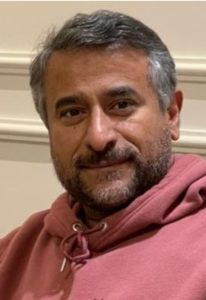
Essam M. Al-Jassim is a Saudi writer and translator based in Jubail, Saudi Arabia. His writings and translations have been featured nationally and internationally in various Arabic and English-language literary journals. He is the translator and editor of the recently published anthology of flash fiction: Furtive Glimpses: Flash Fiction from The Arab World.