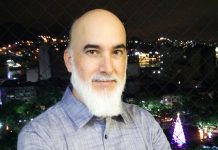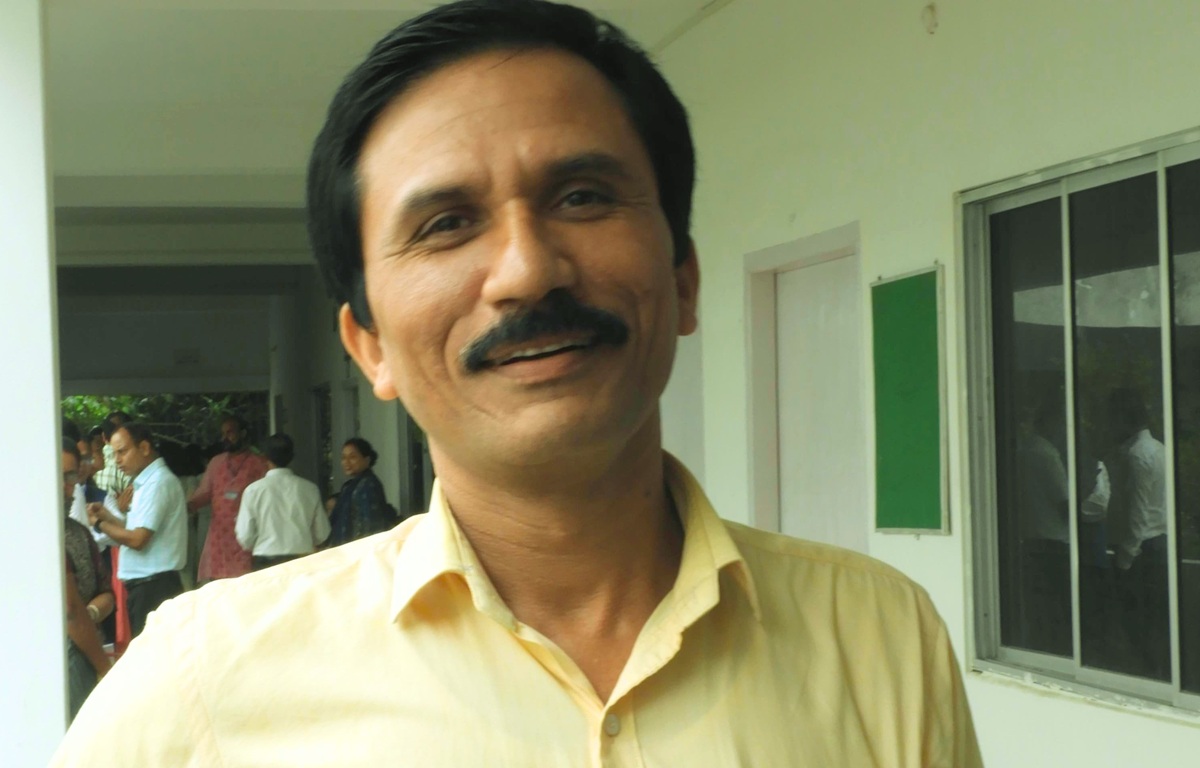
Dr. Rishikesh Upadhyay is an Indian writer, professor and researcher. His works have appeared extensively in various journals, magazines, and literary anthologies. He is also a member of Scholars’ Academic and Scientific Society of India, and Society for Advancement of Human and Nature. Rishikesh’s works have won the Pencraft Literary Excellence Award, the Albert Nelson Lifetime Achievement Award, the Literary Titan Award, the Marquis Who’s Who in the World Award, the National Educationist Award, and the Elsevier Science Reviewer Recognition Award. He is currently an Assistant Professor at Assam University affiliated Haflong Government College, India.
In this exclusive interview to Modern Literature, he answers a wide array of questions about his writing, teaching and research journey.
*
Could you please tell us what first sparked your interest in writing, and how that interest has evolved over the years?
Well, I believe everything happens for a reason. I write because I feel something inside me that needs to be expressed. I started writing for journals probably during 2002, but it makes me happy when readers connect with and enjoy my work. I write to explore the feelings and motives that lie beneath people’s actions. I try to understand and empathize with different points of view. For me, writing is a way of expressing myself while connecting and collaborating with others for research. Through it, I love exploring the possibilities of language, the meaning of identity, the beauty of imagery, and sometimes, the harshness of reality. I don’t take sides unless my sense of ethics asks me to. I simply try to look beyond the obvious and understand what lies beneath the surface. I believe anyone who enjoys seeing beyond what is immediately visible will find something meaningful in my writing.
Could you tell us about your creative process as a writer and how you develop your ideas into literary works?
Probably, intuition guides my writing or research process. I am not a methodical or deliberate writer, nor a professional bound by academic rules though in academic. When I create or write, I try not to let writing methods influence me. I like to let my imagination and research fly freely and find its own path. I love when writing or poetry comes quickly, inspired by anything – a moment, an event, a subject, the news, others writings, or even a pain that is not my own. Sometimes I can imagine another person’s anguish so deeply that I feel it in my own body. For me, creation or writing must be completely free in its most intuitive moment. The daily realities of life, and the endless struggle between greed and humaneness in modern society, often find their way into my poems, nature writing or children’s literature. My poems are like snapshots of everyday life – fleeting moments that are neither tragic nor euphoric, but simply human.
What themes, subject, or ideas do you most enjoy exploring through your writings?
I love to write about plants, human reality, children’s, nature, poetry, etc.
Well, I usually write based on research about my own experiences. I’ve always been interest to the blend of nonfictions, children’s, and the poems. These genres allow me to explore deep human emotions, research and experiences. Writing in these genres bounces me the freedom to create intricate, magical worlds and explore into the intricacies of human relationships, the natural environments and personal growth. The best stories have something to say. That’s important to me.
If I may ask, what do you discover about yourself, your ideas, or the world around you through the process of writing?
This is interesting. Writing reveals something of our inner self. That is an inescapable part of writing. When the writing or research is true, the self behind it is true as well. Yes, perhaps it is really a matter of discovering oneself. The essential quality of creativity is an inner stillness. Only when we become centered within ourselves can we begin to discover our true voice – the voice that comes from deep within us. Life on the surface can be an illusion. We have to find our way deeper, down into the well where the truth, waits.
You’ve explored different genres, including poetry and children’s literature. What draws you particularly to these forms, and what do they allow you to express that other genres might not?
I love all genres. I think poems allow for a bit more storytelling, expressing toward the readers. It is important that the language has a certain musicality to it. I see it as a flow, a cascade of words, which might leave the reader with a final thoughtful observation. I wrote poetry during my school days though none were published at that time. For a long time, I was primarily a non-fiction / academic writer; I came back to poetry recently. I don’t think of myself as a poet at all in a sense, though I have been writing a lot of poems and enjoying them.
As for the stories for children, I spend time with all seven kids at home. I love young children and want to offer stories that speak to their emotional lives. This life experience has showed me that kids are wonderful and people in their own right who deserve their own stories. I want to make books available that speak to them and showcase their viewpoints.
You completed your research career at Assam University and now teach at Haflong Government College under the same university. What do you find most rewarding about teaching, and what influenced your decision to work in a government college rather than at a private institution?
As I said, I love writing and love helping people as well, so teaching students and writing combines my two primary loves. I especially enjoy helping students who believe they are bad writers or readers – I help them understand that they’re better than they thought. I enjoy helping them find confidence in their writing assignments, projects, etc. I think I’m a much better writer and teacher (i.e., assistant professor) now than I ever could’ve been if I’d never taught students.
I find teaching at a government college satisfying and sufficient because the focus is on classroom teaching – on helping people – instead of on producing research. Also, in our college, there’s a lot of diversity, poor and effortless pupils, students from different communities, and I enjoy in helping them as well. I’ve met so many different pupils from so many different places, communities and backgrounds. That has helped me greatly as a writer and in my teaching profession.
What advice would you offer to aspiring writers who are just beginning their literary journey?
These may vary. Would you please spend some time thinking about your reason for writing? Be prepared to invest a thousand hours, energy and perhaps many more, to finish a writing you are proud to share with your friends and family, and of course to the world. Make writing a hobby or passion, not for earning money or promotion. Revising and polishing your work before submitting it is also essential.
Beyond writing, what are some of your passions or interests that occupy your time and inspire you?
I enjoy teaching and interacting with pupils, doing research work in the laboratory, thinking, sitting with a laptop, observing, walking, pouring water to plants, and watching television with my family members. Right now, I am an Assistant Professor at an Assam University affiliated local college.
How do you define and measure success across your writing, teaching, and research, and what achievements or experiences have been most meaningful to you?
What a good question. I think a writer or an author is to communicate with readers. Likewise, a teacher is to communicate with students for bringing out the best in them. I feel successful whenever someone talks to me about my books/writings/teachings, and they resonate with what I was trying to communicate. It makes me feel so happy and excited. I mean it differently. When I came to know or hear from someone that they appreciated, connected with something I wrote or published, that it enriched their lives or minds, even if just for a few seconds, I know I have been successful as a writer or author. Money and fame would be great, don’t get me wrong, but those are different types of success. But, for something I wrote to make an impact, create a connection with someone, with my readers, that’s truly priceless.
Success is when I hear that readers/students enjoyed one of my writings, creations, research, and teachings or identified with it somehow.
When you’re not writing or teaching, what kinds of books do you most enjoy reading, and are there any particular authors or works you return to often?
Well, I want something that educates me, and better yet, teaches me something good. I pick those books by the author rather than the content sometimes. And the best stories have something to say. That’s important to me. There’s nothing better than the feel of a real book in your hands!
Looking back on your journey, is there anything you wish you had done differently or any regrets you would like to share?
Yes, I don’t have many photographs, videos, or emails from my late father. Sadly, he passed away before smartphones and the digital world became part of our everyday lives. Sometimes, I wish I could go back just once – to take one more photograph, record his voice, or save a simple message from him. Not because I needed those things back then, but because I need them so much now.