Why do you write?
That’s like asking a tree why sap flows through it, why it bears fruit, why its leaves change colour in autumn. There is a natural imperative that transcends will, necessity and, very often, talent. Therefore, I write because it is inevitable. And because, being inevitable, writing becomes part of my very being and the natural light that I am able to project onto the outside world.
What does poetry mean to you?
It is a space of freedom in a world where we are increasingly deprived of it. But it is not simply freedom (in which case it would be no different from other liberating acts), but a freedom in which aesthetics, linguistic and visual expressions, and rhythms, tones and timbres converge… helping us to explore our own voice.
How and when did you start writing?
Both the ‘how’ and the ‘when’ are blurred in my memory. In the heart of my memory, I am a quiet little girl who writes, yet at the same time restless, observing the world, scrutinising it and embracing it. I cannot separate my first attempts at writing from my curiosity about words. I have always had a loving – and for that very reason, ambivalent – relationship with words, so poetry was the most logical way to make my bond with them feel natural.
Have you had any work published? When did you start publishing?
I’ve had a lot of work published, mainly poetry and essays. When I was 11, I started writing very militant articles in the local press – I’m from a small town north of Barcelona, Spain- I remember some people calling me an ‘anarchist’ when I didn’t even know what that word meant. Looking back, I find it amusing, and I feel an infinite tenderness towards those people: it’s quite likely that they didn’t know what anarchy meant either.
At the age of 13, I published my first book of poetry, and it was anything but anarchic: poetry proposes a different order, a different logic, even a break with everyday language, but it does not sow chaos. Poetry can shake you up and hit you in the pit of your stomach; it can transform you; it can turn your world upside down; it can illuminate dark areas and darken the bright ones; it can stir you to your very core… but in all of this, even in its most rebellious form, it builds and embraces: the very opposite of chaos.
Are you a professional poet?
I’m not quite sure what that means. Are there such things as professional poets, in the same way that there are consultants or IT specialists? I don’t think so. We are artisans of the word. And our poetic nature lies in the imperfection of our expression and the uncertainty of our longing. But there’s no doubt that we’re talking about something very far removed from productivity, and even more so in a Calvinist sense. Strictly speaking, nobody makes a living from poetry, as poetry is nourishment, not a means of exchange.
Is there any story or anecdote that has had an impact, however small, on your journey as a poet?
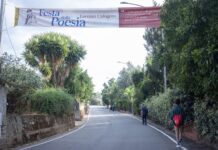
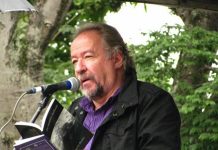
For me, festivals and recitals are a marvellous ecosystem. It had never occurred to me that poetry could be physical and so deeply rooted in the body until I saw it take the form of a tremor, a dance, an embrace, music… Poetry is very much holistic and has a touch of the sacred about it. That is why we must preserve it: because it challenges us and because, as we experience it, it humanises us, it makes us better people.
About the Author
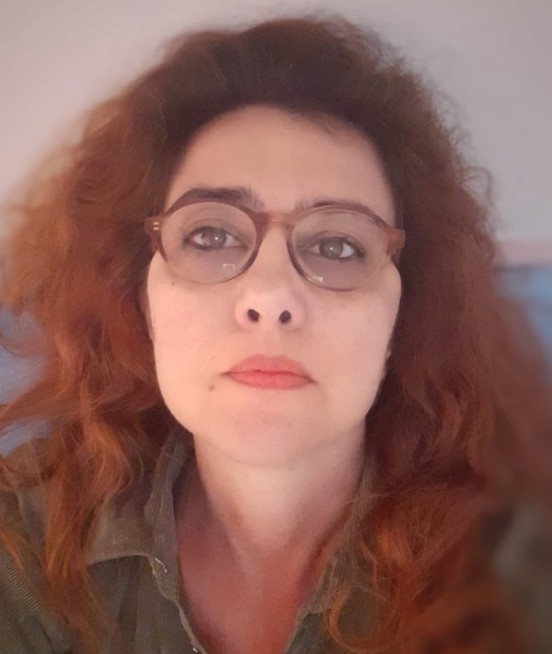
Natalia Fernández Díaz-Cabal is a polyglot, translator, lecturer, nomad, international speaker, entomologist of words, inveterate cultivator of curiosity, stubbornly self-taught visual artist and poet. She is a Ph.D. in Linguistics and Ph.D. in Philosophy of science. She has delivered lectures, seminars, recitals and courses in more than 15 countries in Europe, America, Asia and Africa. She has also authored several books of poetry.